Some people think that all digital currencies are a form of Pyramid Scheme. While some think that all but Bitcoin are pyramid currencies. Some even think that A-shares are inferior to these pyramid currencies...
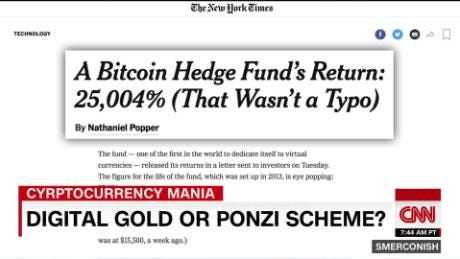
The frequent emergence of "MLM Token" --- a cryptocurrency that is fundamentally a Ponzi Scheme that employs various ways to induce parabolic price growths and also sustain its price from collapsing --- this year has further convinced the public that the entire cryptocurrency industry is a pyramid fraud.
However, such one-size-fits-all judgments are always biased.
This article hopes to break away from the traditional definition of Pyramid Schemes. It also hopes to break down the two most common strategies used in Pyramid Schemes --- Take-over and Ponzi.
Take-over Strategy: Brokers' Games of Raising Prices
In general economic theories, it is widely assumed that the price of goods is determined by the buyers and sellers. Producers compete with one another to provide high-quality and low-cost goods, and consumers select those that meet their needs.
In reality, the trading of goods is not so simple. Before the goods are delivered to customers, they usually go through a lot of intermediaries and dealers. Producers not only have to meet the needs of consumers but the "transaction needs" of the intermediaries.
In order to maximize their own interests, the next layer of intermediaries who takes over will be naturally inclined to raise prices.
"In such "take-over" transactions, the more difficult the intermediary transaction is, the less easily the transaction demand can be met, and the more easily prices will be distorted and manipulated."
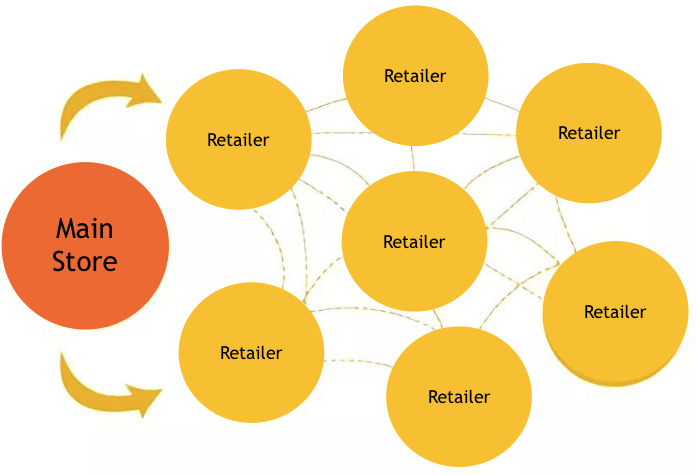
This kind of take-over strategy happens more in the real economy, especially in the field of consumer goods. As the origin of Pyramid Marketing, the United States also separates it into MLM (Multilevel Marketing) and Pyramid Schemes. The latter is actually the extreme version of the former, which can easily lead to fraud.
What about the stability of such strategies? Let's take a look at the following case studies.
The 'Indestructible' Herbalife?

Herbalife is the classic case of a take-over strategy.

In 2012, Bill Ackman publicly announced his plan to short Herbalife. He pointed out that most of Herbalife's products are sold to retailers at a high price with the take-over model. It was difficult for retailers to make a profit by just selling the products, they needed to attract customers to pay to join the membership or become retailers under them. In this vicious cycle, the company would eventually be abandoned by investors and bankrupt due to the slowing growth and fraud.
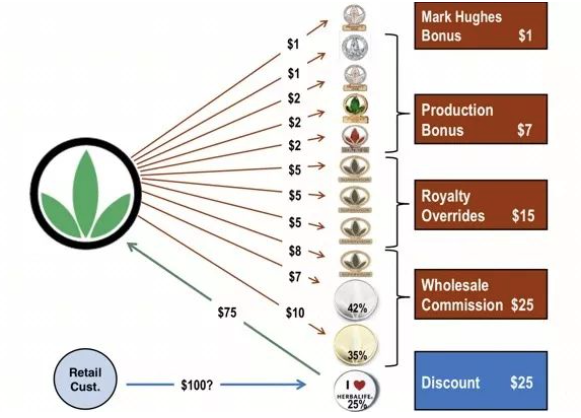
However, after multiple investigations, Herbalife's business was not significantly affected. This fully demonstrates how strong Herbalife is under the take-over business model. In fact, regardless of how compelling Bill Ackman's arguments are, Herbalife's empire would never be destroyed if the following key points are not overturned.

- Firstly, Herbalife expands rapidly through the take-over model, and there is not much distribution of profit to retailers for the sale of goods. The company earns most of the profits while retailers only get a small amount of commission and base salary."
The key strategy to take-over business model lies in controlling the profit-sharing ratio, that is, the percentage of profit that the project owner rewards for marketing. Successful consumer goods companies will strictly control this percentage to prevent pressures from their marketing channels.

- Secondly, about 30% of the retailers will bankrupt because of losses and excessive stocking of inventory. Yet, the failures of this group of people do not affect the company's growth nor does it increase its moral hazard. This is partly due to the growth brought by the company's overseas business.
The vast majority of the retailers who take over at the final stage are those who lack business competency, illegal immigrants, or those who want to make a fortune overnight. When a business fails to develop, bankrupt distributors either admit their incompetence and leave, or try to safeguard their interests. However, for those with illegal immigration status, they lack channels for safeguarding their interests.
In this context, is the take-over business model in real economy indestructible? Not exactly.
The next case will show us that the project will discontinue only when the manufacturer is forced to shut down or the industry suffers a fatal blow.
Jiugui Liquor's Encounter with the Black Swan

The liquor plasticizer incident in 2012 led to the continued depression of the liquor industry as a whole.
The domestic liquor industry has been developing rapidly since 2009. Jiugui Liquor is one of the typical examples. Beginning in 2011, the performance of alcoholic drinks has been rising at a rate of 100%.
Although it is not a pyramid scheme project, its market pattern is somewhat like the take-over strategy.
Its business model was to attract retailers to continuously buy liquor through instilling the expectation that demand exceeds supply, hence, prices would rise. As revenue increased, retailers, in turn, purchased its shares in large quantities. Even investors were buying the company's liquor, making liquor prices and sales revenue grow hand in hand. As a result, share prices naturally rose.

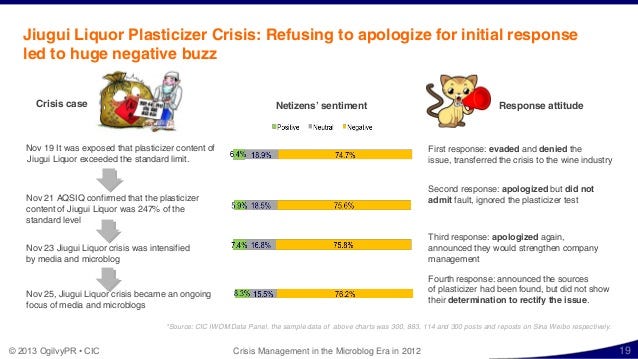
At the end of 2012, the Black Swan event occurred. The quality supervision bureau detected that the percentage of plasticizer in Jiugui Liquor's products exceeded the standard. Under the pressure from the industry, capital market, public opinion, and supervision, the entire liquor business was almost destroyed. While the 'passing the parcel' game among retailers ended abruptly; Jiugui Liquor, known for its radicalism, were also facing trauma. Although it did not shut down as Sanlu Group did, it suffered from the loss of revenue and deteriorating company performance.
When the industry recovered in 2016, retailers started to play again.
Take Maotai Liquor as an example: at present, the retail price is close to 2000 yuan, while the company announces a factory price of only 969 yuan --- retailers earn nearly 100% of the factory's revenue. This was revealed in one of the statements when the chairman of the Maotai Board of Directors was expelled from the Party and dismissed from his position. "Providing convenience for retailers to illegally sell Maotai liquor in violation of regulations, led to serious damage to the market environment of Maotai liquor."

The take-over strategy was born together with trading. It originated from a large number of intermediaries and distributors brought about by the transaction demand. It thrived in the consumer goods industry and flourished in the United States, which is a country known for Pyramid Schemes.
It will only end if coercive measures are forcefully taken by external agencies.
The main risk these firms face is bankruptcy and withdrawal from the market once the industry enters a recession and they lose their market share. Antique trading, futures speculation in the past and sneakers trading holds the same principle.
Ponzi Strategy: Schedule Payments of High Interest
The Ponzi scheme was a high-return wealth management project launched by an Italian named Charles Ponzi in the United States in the early 20th century.
It was simply just a game of robbing Peter to pay Paul.

Under the Ponzi scheme, debts and creditor's rights traded are not commodities. Hence, the key is to promise return instead of the price. Sellers do not need to manipulate prices, or even properly manage the portfolio. Everything would be fine as long as they pay interest on time, get good reviews, expand the business, and prevent any run on their business.
As a result, the core demand of Ponzi schemes has become "on-time payment" in actual transactions. Success in this step will enable more and more customers to trust the project and invest their principle.
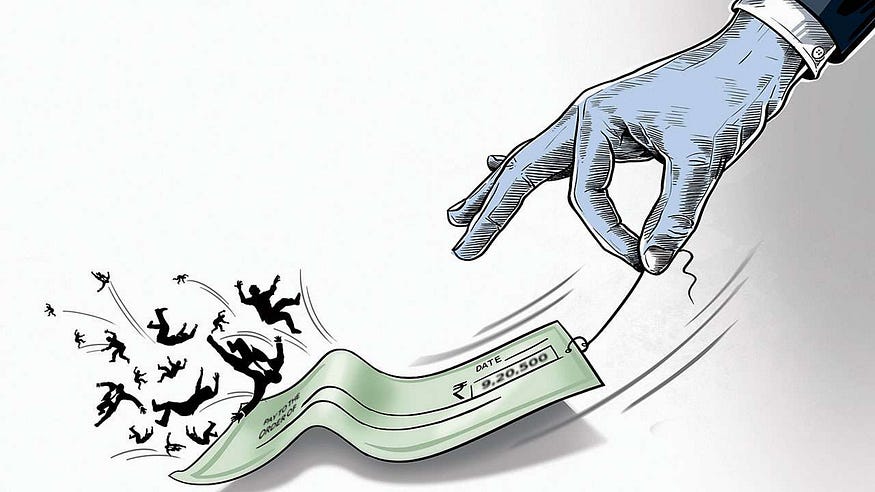
However, in reality, the change in the real value of the paying currency will affect the "on-time payment". In order to reduce payment pressure, the project manager is more inclined to use various means such as currency devaluation, debt-to-equity swap and so on in the final payment.
Interest
What's most attractive about Ponzi schemes is its 'high return', or 'high interest' specifically.
The earliest record about interest is in a cultural relic in Sumeria in 2400 BC. The inscription on it stated: 'The leaders of Uma would lend out 1 guru of barley in Nanshe and Ningsu, which will generate interest totaling 8.64 million gurus.'
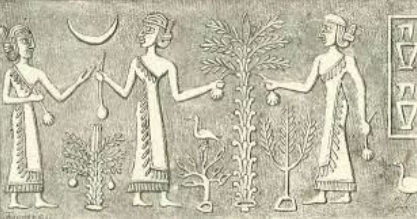
This all started with two ancient cities in the Mesopotamian Plain, Lagosh and Uma, which were hostile towards each other. Uma took a piece of Lagosh's land and occupied it for two generations. When Lagosh defeated its enemy and recaptured it, Uma demanded compensation in the form of "rent" and interest. The interest rate for compensation was compounded at 33% per unit of barley for 56 years. Of course, such astronomical amounts of compensation could not be repaid by the other party. Thus, in essence, this debt resulted in Uma becoming Lagosh's slave.
We can see that the ancient people not only knew the concept of compound interest but also how to calculate it. They understood the concept of exponential growth.
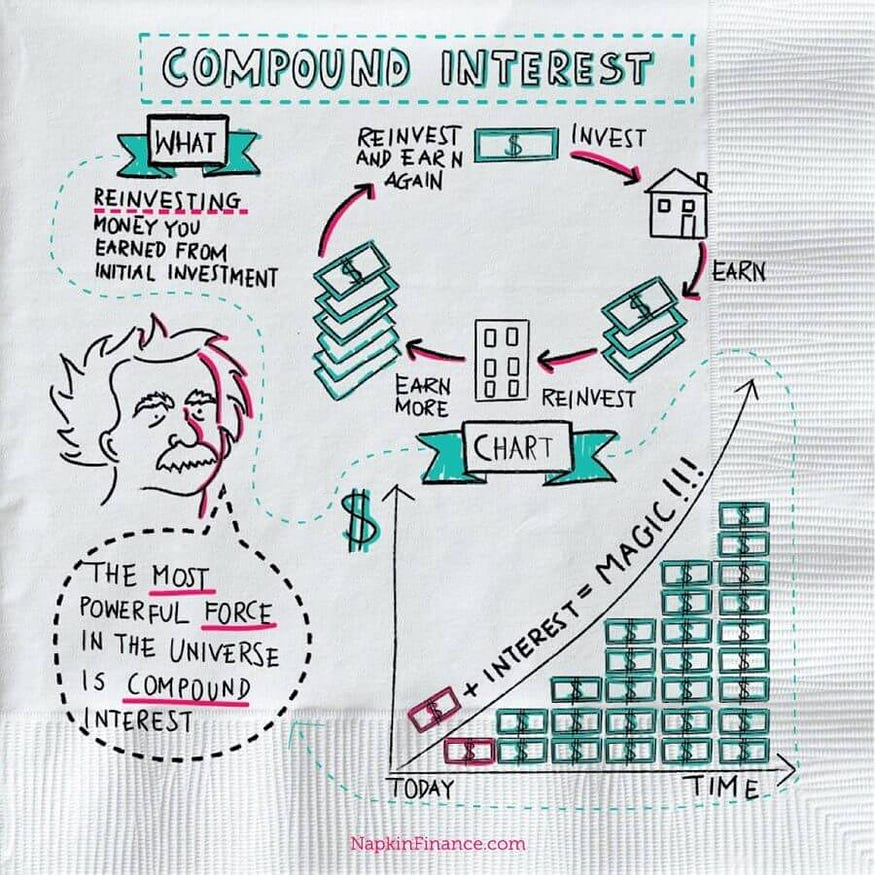
Interest came before wealth management. Financial historians believe that communities in the past were prepared to respond to crises through interest-bearing lending. Debt allows borrowers to use future money to meet current needs, smoothing the gap and consumption cycle.
Wealth Management
Wealth management and fixed income-like securities can be traced back to the invention of bonds and annuities. Historically, creditors and debtors have raised capital and completed projects with common goals (i.e. wars, pension, etc.), and paid interest in return. In the early days, people would use the money to only support real needs.
However, with the increase of social wealth, which expands to the mass public, the nature of both investors and investees has changed. This is because it is much faster and easier to raise capital than operating a business.
To pursue more profits, high-risk products were eventually sold to investors who are unable to bear such high risks. To attract more people to invest, the project will be marketed in various ways, such as luxury decoration, buying landmarks and so on.

Whether the Ponzi strategy will collapse depends on the degree of convenience in the financial market and the macro environment. The higher the degree of financial convenience and ease of raising funds, the harder it will be for problems to emerge.
In a highly financialized environment characterized by the increase of scale in the capital, one can always find high-quality investment targets and make a successful investment. High-quality securities can easily appreciate in a relaxed environment, which one can easily use mortgages, refinancing and other tools to mitigate the pressure. However, when financial convenience level is low, asset shortage and lack of financial instruments follow, resulting in capital idling and the acceleration of ceased operations in the Ponzi strategy.
The Ponzi strategy originated from debt and interest, flourished with the participation by the general public in high-income financial management. This would only end in the financial and economic crisis.
Institutions are not worried about the financial crisis, on the contrary, they would want to unload their burdens through it. If they survive the crisis, they can even buy quality assets at a cheaper price.

Take-over Vs Ponzi
The take-over strategy requires producers and retailers to constantly create new concepts for their products. In addition to meeting people's basic needs, they may further meet other needs, such as income growth, identity and so on. The deep binding of interests enables them to withstand the fluctuations of the economic cycle and survive the winter season of the industry.
On the other hand, with the monetary credit system, the Ponzi strategy has enabled powerful lending institutions to obtain a large amount of capital. It has also given listed companies the space and tools for the capital operation, which has promoted the growth of the market and the operation of the economy.
Both were great inventions in the course of society's commercial development. Yet, the misuse of such tools, or even malicious combination of the two, will lead to frauds that are destined to end in tragedy.
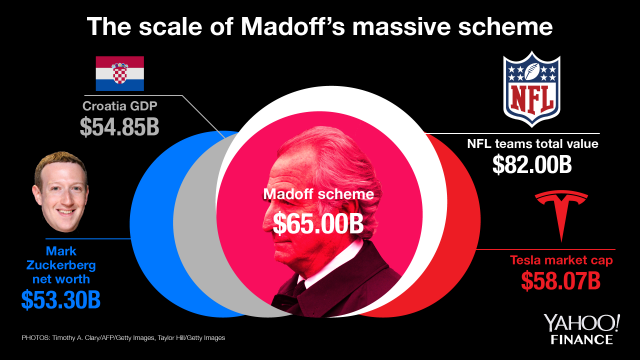
MLM Token: Take-over + Ponzi
The cryptocurrency industry made better use of these two strategies. A typical MLM token project operates as below:
Preparation Stage: Set Goals & Rules
- MLM token's team holds high stake in a currency, say, ABC currency, that is traded on an exchange.
- Investors have their assets managed through a 'Wallet App' or 'Game App' that pays fixed income.
- Investors pay the mainstream currencies such as USDT and ETH to manage their wealth.
- The pay-off of this model is the fixed-period payment. If 100-day repayment is announced, the investors will be paid a daily dividend of 1% of their principal with the fiat currency, ABC currency, which lasts for one year.
- Investors receive the operating team's ABC currency that has the highest price on that day as interest.
Operating Stage: Marketing, Price-pulling
Price-pulling is a process that artificially pulls up the currency's price by purchasing large quantities.
- The project manager continuously pulls the prices to reduce the number of coins being issued as dividends.
- In order to cut short, the period of recovering the principle, investors hold the currency and avoid selling, which indirectly reduces the pressure of selling-off.
- Appreciation of the currency attracts investors and traders from secondary markets, providing liquidity to the market.
- Investors of related wealth management portfolios will also market it and pull in other investors to ensure sufficient capital in the firm.
Wrapping-up Stage: End of Project
- When revenue and market share decreases, the team will develop various tools or games to earn more of its own currency. It also aims to encourage investors to lock their positions so as to reduce the sell-off pressure.;
- With the arrival of a bear market, all currencies' prices will drop. When the project manager announces the end of the project, investors would not have the time to react.
The team received huge amounts of starting capital through the Ponzi strategy, and because of different agents' promotions, it will continue to get real monetary support at the early and mid-stage of their "business".

Together with the take-over strategy, the goal is to appreciate the currency because the more it appreciates, the less the team will pay out as dividends. At the same time, with the decrease in dividends and rising coin prices, positive investors' sentiments will lead to the appreciation of the currency as well.
As long as the team is able to continue manipulating the market, without being 'caught' by the distributing agents, they can do the best possible job in appreciating the currency.
Can we invest in MLM token?
Never.
Even though they expose strong Pyramid Fraud characteristics, MLM tokens will always have their markets and target groups.
This is because the MLM token's team will openly concentrate the sole goal of their 'business' on appreciating the currency rapidly and continuously. They would not use so-called 'value investing', 'time will prove it' and 'undervalued' concepts to comfort investors from the secondary market. Such an act greatly reduces pressure in its operation. The team's use of capital is also efficient, as they will not spend on developing irrelevant programs or organize offline events and so on.
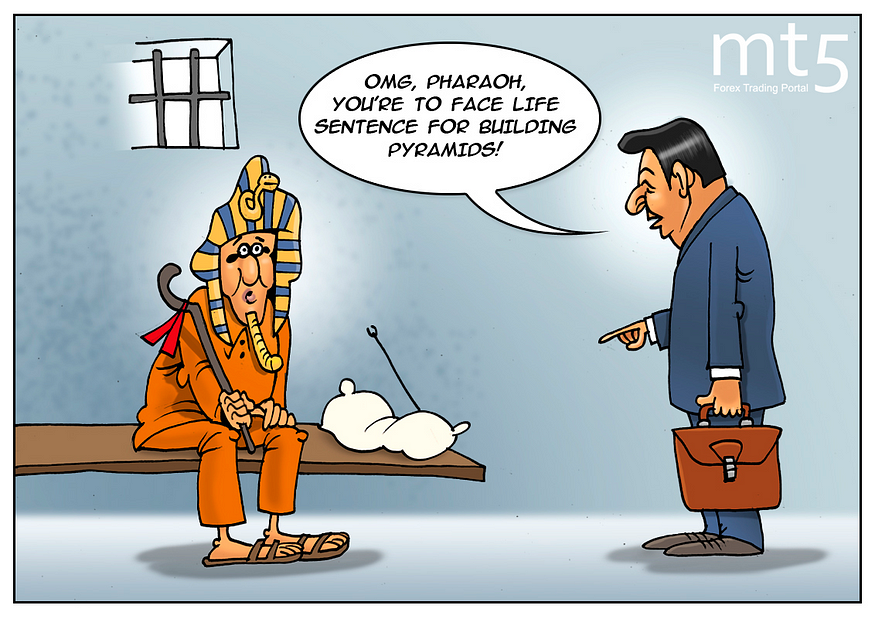
As a result, many participants will hold a fluke mind and think that they can profit from the appreciation so long as they are faster than the project manager.
Nevertheless, over 99% of the MLM token projects are failures. From the observation of those that became 'famous' by luck, we can see the following characteristics:
- The currency launched in a second-tier exchange or higher.
- Address of the wallet was transparent.
- The commission rate was strictly monitored, so the distributors were unable to rip off the profits.
Even with these characteristics, more than 90% of participants in these projects ended up in a net loss. There are many uncontrollable risks in the operations of MLM tokens. For example, the team might take off after receiving huge amounts of capital; there could be unpredicted events during the marketing; bugs might appear in the Smart Contract; the exchange might print large amounts of counterfeit money, and so on.
This article reviewed the origin and principles of the take-over and Ponzi strategies in Pyramid Schemes and analyzed the main strategies used by MLM tokens. We hope to have given you some pointers that will hopefully reduce unnecessary risks in your investment assets.
Even if your fluke mind succeeded, all your gains are based on the majority's loss and pain. You could also face the risk of serious legal consequences.