In less than three months, Catizen has amassed over 23 million users, with a daily active user (DAU) count of nearly 3.5 million. It has generated over $16 million in in-game purchases. Among these, over 2 million members are part of the Telegram Premium user community, meaning 40% of Telegram Premium users are Catizen users. Additionally, there are 1.5 million blockchain users and more than 550,000 paying users, with an average revenue per user (ARPU) of $30. Catizen has also announced the launch of a game center.
With TON (The Open Network) recently going live on Binance, this article reviews why we decided to support Catizen at the end of 2022 and why we remain optimistic about Catizen in today’s Telegram ecosystem.
Why Did We Invest in Catizen?
Back in 2022, when we decided to invest in the Catizen team, it was totally unexpected. At the time, the collapse of FTX had left the industry at its lowest point. Apart from confidence in the prices of Bitcoin and Ethereum, we had no idea which projects would succeed next. A vague assumption was that the 2021 stories around NFTs and the Metaverse had already brought crypto into the mainstream, though most traditional institutions and celebrities who dipped their toes in had an unpleasant experience. If the next cycle were to bring new mass adoption, the model would have to be more replicable to entice both returners and new users.
"We like growth and want to bring the IAA+IAP hybrid monetization model into the crypto space."
This was the idea Catizen's team mentioned during our first discussion about the project. They already had experience in GameFi, but as a team primarily focused on traditional mobile game traffic acquisition, they saw little future in pure PvP GameFi games. They found the hybrid IAA (in-game advertising) + IAP (in-game purchases) model, combined with crypto cashback, more exciting and better suited to their expertise. This approach would leverage their skills in traditional user acquisition and their experience with casual games. "We believe we should bring gaming into our own domain."
"Mini games are like the short videos of the gaming world – both cater to modern, fast-paced lifestyles."
At the time, I could relate to this. During the bear market boredom, I found myself scrolling through Bilibili and Douyin, often seeing mini-game ads (I recommend "Pea Battle," a match-three tower defense game). While I consider myself a console gamer, the engaging game ads eventually pulled me in during sleepless nights. I'd end up paying $10 for a starter pack or watch a series of repetitive ads just to progress in these games, only to delete them after a week or two, only to download another later. It felt like an addiction, much like in the "quitting porn" community. The addictive nature and monetization of mini-games were very real.
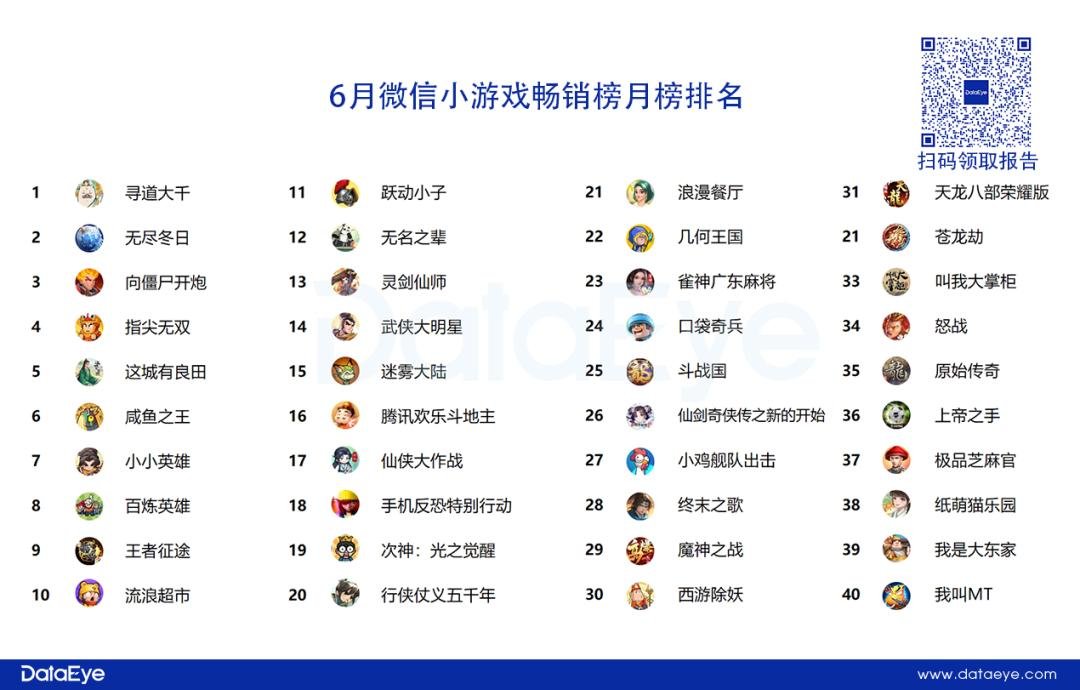
I've played nearly all of these games – they’re simple, but addictive.
The Fast Growth of Mini Games
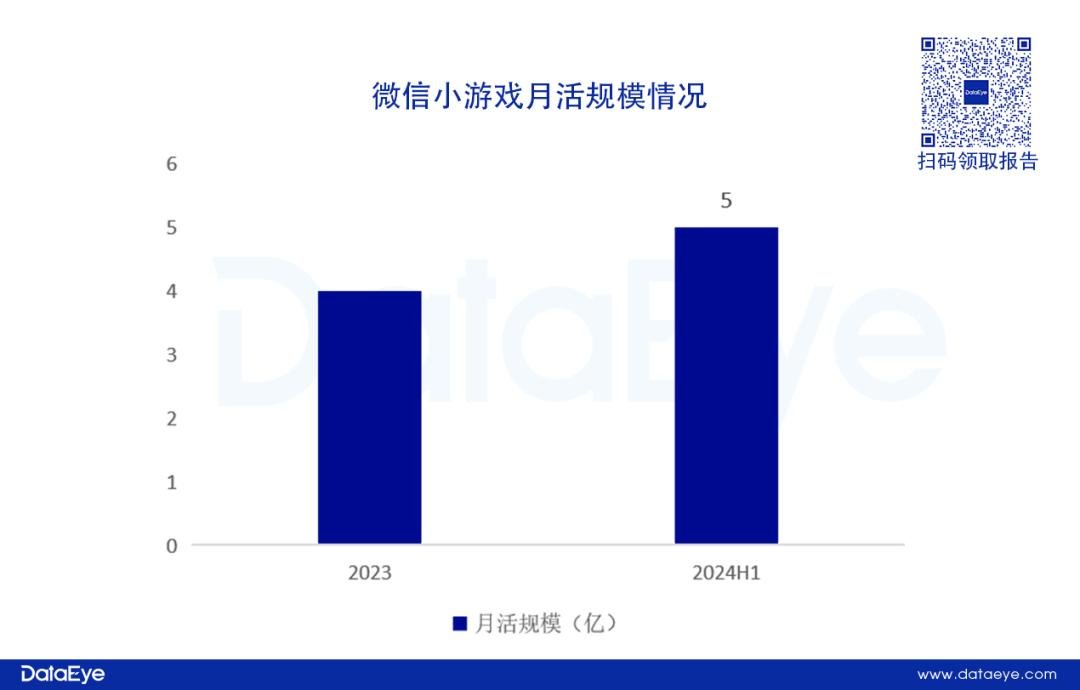
Looking at a recent DataEyes report, domestic mini-game revenue in China reached 20 billion yuan in 2023, and it is expected to exceed 60 billion yuan this year—a 300% year-on-year growth. According to Tencent's data, monthly active users for mini-games have surpassed 500 million, with daily online activity averaging around one hour. The 14-day retention rate is over 50%, and user habits are solidifying. Mini-games are entering their "iPhone moment" this year. Meanwhile, the overall gaming industry is struggling with stagnant user growth, making mini-games the only hope for breaking through in China's saturated market. This mirrors the challenges faced by the crypto world in finding new growth opportunities.
Domestic mini-games are evolving towards more complex, diverse formats with hybrid monetization strategies, increasing their profitability. Mini-game exports have also reached $470 million in the first half of 2024, still in an exploratory stage but with significant growth potential.
However, taking mini-games abroad is no easy task. The main challenge is that in China, platforms like WeChat provide a natural traffic source for mini-games, while overseas markets lack this environment. PWA (Progressive Web Apps), the predecessor to mini-apps, has not gained traction due to issues like the "Apple tax." This changed somewhat when friend.tech became popular, bringing PWAs back into focus. (On a side note, I recommend trying TON.place, a PWA version of OnlyFans with a great user experience).
The Catizen team also devised a solution for this challenge.
"We want to go all-in on the Telegram ecosystem."
By early 2023, the team had identified Telegram as the solution for bringing "mini-games + global expansion + crypto" together. Telegram is the easiest platform to compare to WeChat overseas, and the team believed it could experiment with commercialization efforts similar to WeChat, all while leveraging crypto and accessing a massive user base.
At the time, however, Telegram and TON's infrastructure were still maturing, and Telegram’s commercialization efforts were just beginning. It wasn’t as obvious then as it is now that Telegram would become a key growth driver in the crypto space. The team even studied Russian culture and language to better communicate with the Telegram team, showing their commitment. Behind the success of capitalizing on Telegram's traffic boom is the unseen persistence and effort.
"Why choose cats?" "Because I'm a cat person." "..."
Looking back, our decision to invest in Catizen had more to do with gut feeling. We recognized the addictive nature of mini-games and their growth potential, believed in the hybrid IAA+IAP monetization model, and thought that combining this with Telegram could be a hit. We also trusted the team’s success in user acquisition for mobile games and their industry connections.
If our initial investment was more based on intuition, the current state of Telegram’s booming mini-app ecosystem gives me even more confidence in Catizen’s future.
The first step was about getting it broadly right; the second step is about eliminating the wrong answers.
The Paradox of Investing in the Telegram Ecosystem
-
Telegram and TON’s roles are decoupled, so projects need to capture Telegram’s traffic surge.
Unlike Solana, where we seek to leverage the platform’s user base, what we need from Telegram are its 900 million potential users to bring fresh blood into the crypto space. Before TON’s ecosystem took off, there were already trading bots like Maestro, Unibot, Banana Gun, and PepeBoost profiting by providing users with fast on-chain trading through Telegram channels and custodial wallets. These bots served Web3 users. If a project can create a product for Web2 users, Telegram and TON wallets will serve as traffic and payment channels, eliminating the need for complex smart contracts and simplifying business operations.
-
Telegram Mini Apps resemble small businesses – good for entrepreneurship, less so for investment.
Traditional crypto projects revolve around infrastructure and narratives. "To get rich, first build roads" is often said. After raising round after round of VC money and building infrastructure, many projects found no real demand, leaving them as "ghost towns." Essentially, token issuance often resembles local debt turned into equity under the guise of high-potential assets.
Telegram, on the other hand, comes with built-in infrastructure and users. It’s now open for "small business" operations, letting people set up "restaurants, tea shops, and massage parlors" to make money. Early entrants who meet basic needs will benefit from the traffic boom, with some potentially making a fortune. However, just because the founders make money doesn't mean it’s a good investment target.
Telegram’s low entry barriers make it ideal for founders to generate real revenue without needing VC funding. If a team has not mastered Telegram’s monetization tricks, it likely won’t attract investment. This differs from traditional crypto infra projects, where proving potential can be expensive. For Telegram Mini Apps, failure costs are low, creating a binary outcome: teams that succeed don’t need funding, and those that fail aren’t attractive to investors.
-
Traditional token exits are less appealing for Telegram Mini Apps than revenue sharing or dividends.
Token exits face challenges like founder intent, narrative limitations, and business model scalability. Revenue sharing or dividends are harder to enforce in the current crypto environment.
Telegram Mini Apps are similar to the NFT era’s low-barrier projects, where success depends on community management and sales. While apps can generate continuous income through in-app purchases, the weak regulatory framework in crypto presents challenges in ensuring proper revenue sharing.
For teams with strong execution, Telegram Mini Apps offer a low-barrier opportunity to develop real users and revenue. But for investors, they’re more like a gamble, depending heavily on luck.
However, this paradox highlights Catizen’s scarcity.
-
Catizen has already demonstrated its ability to develop successful products, manage communities, and monetize traffic within Telegram. In under three months, it attracted over 23 million users, nearly 3.5 million DAU, and generated $16 million in in-game purchases. It also has 1.5 million blockchain users and over 550,000 paying users, with an ARPU of $30.
-
The team has publicly committed to airdrops and future utility.
-
The team plans to launch a gaming platform with over 200 mini-games, many of which have already seen billions of downloads on WeChat and Google Play. This is thanks to the Catizen team’s extensive background in the Chinese gaming industry and their Telegram experience. They are positioned to become the most successful gaming platform on Telegram.
Conclusion
Cats are adorable!