01 Introduction
Looking back over three millennia, humanity today possesses abilities that would have seemed god-like in ancient times.
We observe the natural universe, discovering, learning, and imitating, continually refining our natural sciences today. Mathematics, called the science of infinity by Hermann Weyl in his "Collected Papers" (1968), is the most important formal science created by humanity. Mathematics is not part of nature, yet it can conjure spaces of four, five, or an infinite number of dimensions. We can imagine, understand, and even simulate these, but we can never physically reach them.
Until now, the Metaverse represents the crucial technology that aids humanity in ascending from the natural universe.
The 21st century is the century of humanity's migration into virtual worlds.
02 How the Metaverse Will Reconstruct the Dimensions of Our World
The concept of the Metaverse originates from Neal Stephenson's 1992 novel "Snow Crash."

In "Snow Crash," the real world is depicted as a cyberpunk vista, whereas the Metaverse hosts human knowledge, entertainment, and our entire cultural spirit. Our current physical universe is three-dimensional, bound by countless physical laws. Based on our understanding of the physical world, we have today's science and our material civilization.
However, the advent of the Metaverse will reconstruct the dimensions of our world. Many actions that defy physical laws but adhere to the logic of code become possible. In today's physical world, time is irreversible, energy is conserved, and life thrives on negative entropy. These are correct, at least for today.
In the Metaverse, however, we can create our own rules for our cultural spirit through code. Time in the Metaverse can be a state, a process, a numerical value. Every object can be assigned the attribute of time, much like the apple in Doctor Strange. In the Metaverse, an apple, besides possessing the usual characteristics of an apple, can also embody the definition of time. For code, it is merely adding an attribute to a structure. However, for inhabitants of the Metaverse, time is reversible. The time affecting an apple can be adjusted like a progress bar.
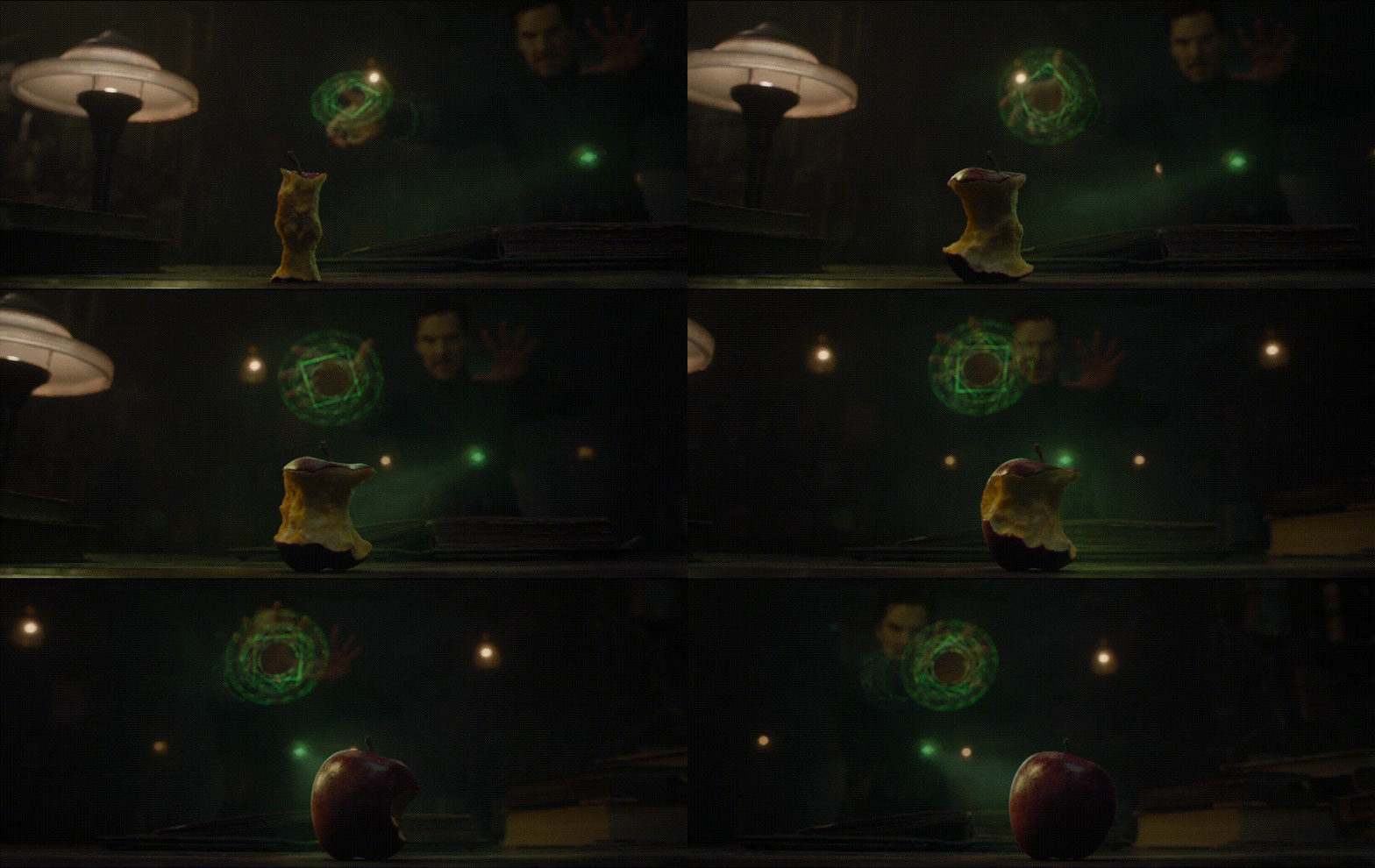
Defying physical constraints is a common occurrence in the Metaverse. We cannot fathom the happenings in the Metaverse with today's ingrained perceptions; we need to adopt the viewpoint of the Metaverse's natives. For the next generation of programmers and designers, they will be the natives of the Metaverse. Like natives to the Internet, their ways of receiving information and understanding the world will grow exponentially. All objects in the Metaverse inherently possess countless native attributes, and these individuals will be best suited to thrive in such an environment.
03 The Metaverse and Incremental Markets
Throughout history, humanity has strived for incremental markets.
Starting with the Age of Discovery, from the 15th to the 17th century, European fleets appeared in oceans worldwide, seeking new trade routes and partners. Although they did not find a golden land where all Europeans could live prosperously, they indeed greatly expanded trade routes and secured new increments.
In the 21st century, we discovered that the Internet and computer technology could provide services at an extremely low marginal cost. "Internet colonization" allowed a group of multinational internet giants to gain new increments globally.
In recent years, as no major technological breakthroughs have emerged, the world has gradually fallen back into uneasy shadows. Political tensions and economic instability hint that we are slowly returning to a zero-sum situation.
On one hand, we explore the geographic discoveries of the space age, looking up at the stars, hoping to explore the vast cosmic oceans. On the other hand, we are gradually beginning to construct our virtual spaces through VR/AR, brain-computer interface technologies, and digital twins. The Metaverse is born at this perfect time and space.
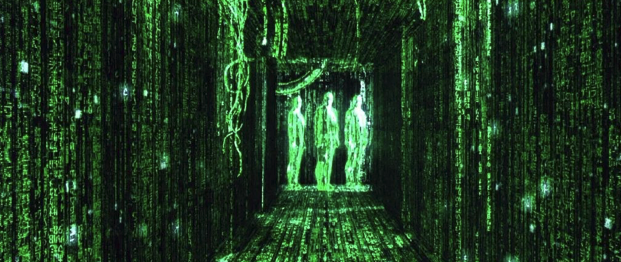
Why do we venture into virtual worlds? One reason is that in the Metaverse, we can access an unlimited incremental market. Like in the movie "Ready Player One," we can experience various interesting services in the virtual world without any real-world consumption. With the advent of brain-computer interface technologies, we might just lie in hibernation pods, experiencing high-dimensional life. This won't overly consume physical world resources, nor will it diminish any of today's rich activities—eating, drinking, playing, all can be experienced just as vividly in the Metaverse. With brain-computer interface technology, even if we feel like we are consuming lavish meals, in the physical world we could be sustained just by nutritional fluids. This allows us to enjoy the pleasure of fried foods without worrying about weight gain or cancer risks.
04 The Technological Singularity of Gradual Progress
The Metaverse offers more than just virtual food and game experiences. If the Metaverse were only for human leisure and entertainment, it wouldn't be able to unveil the future of infinite possibilities.
In the future, over 90% of human activities will occur in the Metaverse. Our scientific research, art, teaching, development, design—nearly all productive activities will take place in the Metaverse. Many might ask, how is that possible? I can see us using the Metaverse for leisure, playing games, or losing weight, but it seems impossible to move all production into the Metaverse; it's not a real world.
Let's not make idealized statements, but rather use production efficiency as an example. If production efficiency in the Metaverse is 10 times, or even 100 times greater than today, how would we choose? Once production efficiency can be exponentially increased, most people will quickly embrace this novelty. So, why would there be such exponential gains in work efficiency?
Because the Metaverse integrates all of computer science's ultimate fantasies to date. Our 5G, VR, AR, brain-computer interfaces, blockchain, artificial intelligence—the Metaverse can host all these technologies.

Take brain-computer interface technology as an example. Our brains can be deceived. We might feel like a long time has passed in a dream, while in reality, it's just been one night. If you could write 10 or 100 papers in the Metaverse in the time it takes to write one paper in the real world, would you enter the Metaverse? With such significant efficiency gains, we would rapidly approach the technological singularity. And these efficiency gains are a conservative estimate; any algorithm or formula run in cloud computing today could have been impossible to solve in the past due to memory overflow.
Therefore, all non-fundamental scientific breakthroughs will accelerate exponentially with the arrival of the Metaverse, ultimately causing an irreversible paradigm shift.
05 Blockchain and Rule Design in the Metaverse
Today's computer scientists do not fully grasp the potential of blockchain and smart contracts. Simply put, blockchain is the first technology born to consolidate consensus. Smart contracts differ sociologically from any previous computer language, even if they use the same syntax. The computer language used to write smart contracts is no longer just a tool for communicating with machines in formal linguistics, but a means of conversing with all computer scientists globally, with all computers, and with the entire Metaverse in cognitive linguistics.
Language influences how people think, and in turn, how they perceive the world.
The computer languages we previously learned were mostly meant to enable computers/machines to perform certain functions. Even the code on GitHub, though public, is not expected to be understood by users.
In today's internet world, users do not attempt to understand the code behind any app. A common saying is, we don't need to understand the technology behind it, I just need to know what functionality it provides. Previous computer programming languages were born to serve this purpose; we write programs to complete a function, to add an event to an app, or to use an artificial intelligence algorithm to distinguish a cat from a human in a photo. But smart contracts are different.
Smart contracts are designed to execute logic and achieve consensus interactions in a network where all people and all machines generate consensus. When we write a smart contract, we might be doing it to prove our integrity, clearly express all the rules in the contract, and leave no backdoors; we might aim for fairness and justice, making the logic and design plans visible to everyone; or we might aim to facilitate consensus interactions, allowing developers to easily connect with the smart contract, just like how gun pools and aggregators conveniently connect the entire decentralized world's financial depth. When we develop a smart contract, we hope developers and ordinary users can understand the logic, ensuring the transparency of core logic. We aim to achieve functionality, security, and consensus interaction by making all core code public.
We design a smart contract to make it easy for everyone to understand, with transparent rules and the same methods of interaction with our contract.
Learning a language affects the way humans think. For the average person, snow is just a white crystal that falls from the air. However, the Inuit language describes snow with over ten terms. Once ordinary people learn Inuit, they can also distinguish many different types of snow. For example, they distinguish states: melting snow, falling snow, snow on the ground, etc.

In 2012, I had the opportunity to enter the Arctic Circle during polar night, which profoundly deepened my understanding of why snow is so vital to their lives. A new perception and way of thinking can emerge from learning a language, which is also true for programmers. The economic foundations and legal rules in the Metaverse world do not fit the traditional computational programming mindset. Today's blockchain developers are among the first trained in this open rule-design thinking. They will be pioneers in the Metaverse, contributing to the birth of this new world.
06 The Three Essentials for the Genesis of the Metaverse
The Metaverse is a fascinating future, but how do we achieve it? After all, we are blockchain developers and computer scientists, not science fiction writers. We can't just provide a beautiful fantasy without a solid technical foundation. I believe the genesis of the Metaverse requires the following three elements:
- PERCEPTION
- REGULATION
- MASS PRODUCTION
PERCEPTION is about sensing. Our current perception of the Metaverse is still weak. Even though we see many Metaverse projects, they still feel like simple, even rudimentary 3D games. Our perception needs much technological support, including VR, AR, MR, brain-computer interface technologies, and computer graphics. Without the support of perception technologies, we cannot truly sense the presence of the Metaverse.
REGULATION involves rules. For a vast world like the Metaverse, foundational economic rules and operational guidelines are necessary. What behaviors should be punished? What rules apply in the Metaverse? What economic infrastructure can provide support? These rules need blockchain technology for public and automatic execution.
MASS PRODUCTION is about scalability. We do not wish for all our technological and human resources to be invested only to create a room-sized Metaverse. We hope the Metaverse can quickly expand to be 10 times, 100 times larger than our current universe, providing a vast incremental market.
I once thought large-scale production would involve 5G, IoT, etc., but upon deeper reflection, I realize it should be artificial intelligence. No matter how skilled a programmer, they are not a first-rate producer in the Metaverse world. All programmers need to read, understand, and translate logic when they code or design. But for machines, Metaverse code is naturally readable. Artificial intelligence understands the Metaverse world at a rate many times faster than humans, and the Metaverse world consists simply of zeros and ones.

In the future, over 99% of the Metaverse world will likely be designed by artificial intelligence. Our programmers will more so guide and establish rules, design boundaries, and assist AI in mass-producing the Metaverse. Moreover, as data and existing Metaverse repositories accumulate, AI's design speed will increase, eventually following certain rules to form an ever-expanding Metaverse space, much like our physical universe.
07 The Sociological Significance of the Metaverse
The Metaverse can effectively prevent human involution, transitioning from a limited civilization to an unlimited one. Looking back at this year, about 21% of US dollars were printed this year, totaling $4.5 trillion. Meanwhile, central banks around the world, in response to the COVID-19 pandemic and US monetary policy, have also chosen to continue their expansionary policies. (US is "printing" money to help save the economy from the COVID-19 crisis, but some wonder how far it can go.)
Where will this printed money go? It's unlikely to flow into real estate, as housing prices in many countries are already quite high, making it normal for young people to be unable to afford homes; it's also unlikely to go into consumer goods and necessities, as although housing prices are high, rental options exist—if meals become unaffordable, then a real crisis emerges; it certainly can't go into purchasing arms and equipment, as that could directly lead to World War III. The only feasible option is the Metaverse. Because starting a business is the quickest way to burn money. Numerous creative ideas, teams, and quality projects will explore the Metaverse, and countless capitals and hot money will also melt away there. Because this money burns up in the Metaverse, it represents the best option for humanity and even the world. These ideas might bring us an unlimited incremental market.
Most importantly, it truly harbors limitless opportunities. Just like the internet, this enthusiasm will quickly push the Metaverse to new heights. This not only avoids the global involution of today but also explores new frontiers in the vast ocean of the Metaverse.
In the real world, we are monkeys limited by physical rules; in the Metaverse, we are deities where code is God. What's past is prologue. (Shakespeare, William, Barbara A. Mowat, and Paul Werstine. "The Tempest (Folger Shakespeare Library)." Washington Square (1994).) I firmly believe the Metaverse will spawn the greatest opportunities of our century, looking forward to meeting everyone in the Metaverse!