Today, I'm going to tell you what I saw, missed, and learned from the crypto market in the H1 2019.
Last Cycle of the Market
In the previous cycle of Bitcoin 's development (2014--2018), there were a lot of new things and transformations that emerged in the crypto market. In this process, the following ideas left a deep impression in my mind:
-
The development of blockchain is indicated by the increase in Bitcoin's price.
-
The token economy is more important than Bitcoin, which was especially apparent in the last cycle as reflected in the fact that the market was mostly led by Ethereum rather than Bitcoin.
-
**Bitcoin is merely the starting point **of the blockchain revolution. It is thought by many to be the first application of blockchain technology, and there will be a variety of applications in the future.
-
The** BTC Dominance Index will continue to decline**. The value dropped from the last cycle of 90% to 40% and continued to decline at the end of 2018. It was once predicted to drop to 10% in this cycle.
-
Though the market is still full of Ponzi schemes and bubbles, the future will be brighter.
Though there are various Black Swan Events in the market, the industry as a whole is getting better. Further, I think the bear run in 2018 is still better than the market in 2017. The market, on the whole, is becoming more and more rational.
Market Review for the Past 6 Months
-
Compared with the previous cycle, the development of blockchain is** slow and lagging behind.**
-
Indicated by the price change, Bitcoin is more popular than the token economy. When it comes to the discussion on the token economy, Bitcoin will always be one of the main topics. In the past year, only a few tokens in the market surpassed Bitcoin, in terms of the percentage increase in price.
-
In addition to Bitcoin and tokens issued by exchanges, the value of most tokens is rarely recognized by the public. This is also closely related to the previous cycle. In the long run, we are more concerned about Bitcoin or other objects that have cash flow, such as the exchange tokens represented by BNB.
However, the development of the token market in the first half of the year is still far from what I had expected.
-
The market is still full of Ponzi schemes, which are becoming more and more blatant. Some of the scams today can easily acquire billions of funds in a few months.
-
The BTC Dominance Index is rising constantly and has reached 65% now.
Growing Bitcoin Dominance, CoinTelegraph
In the last cycle, since the emergence of various altcoins, the BTC Dominance Index slipped rapidly and took a long time to return to the original level. However, in this cycle, the BTC Dominance Index easily rebounded to 60%, and continue to climb even higher.
Where is the value of the tokens and will they have a future?
What's the Problem?
This is a serious topic because I believe that all of you are confident in the future and expect to participate in this event.
In fact, at the beginning of the year, most blockchain practitioners had already prepared to go through the bear market for the entire of 2019. However, after the first half of the year, the rising Bitcoin prices sent the signal that the bear market is ending soon; while the other tokens continue to struggle.
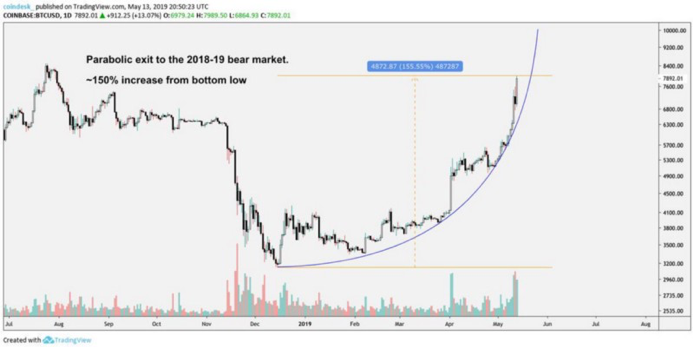
Rising Bitcoin Prices, CoinDesk Markets
Such a strong contrast makes me confused that I cannot stop thinking about it in recent months.
What is wrong with the market? Or is it that the majority of the people in the blockchain industry has wrongly predicted?
We know that the market is always right, so it must be blamed on us, the industry practitioners.
To find out the problems, I think it is time to learn about this market all over again, realizing what the difference is from the former practice.
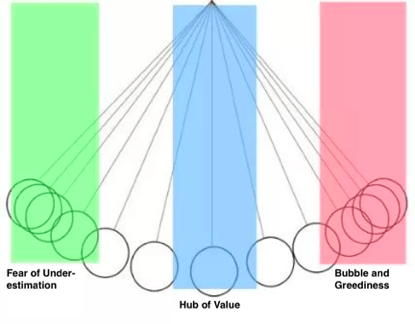
Cycle: The Pendulum of the Economy
The picture above shows a typical pendulum theory. We can imagine that the price of a certain token in the market swings back and forth like the pendulum, and rarely stays in the hub of value. Further, physics shows us that the pendulum swings at the fastest speed in the hub area.
Many people will use this picture to explain finance and economy, which eventually concludes with the** keyword "cycle"**. Although everyone knows the cycle, I did not think the cycle would bring such obvious fluctuations in the crypto market this year. However, my biggest question this year comes from the cycle.
In order to explain more reasonably about what happened in the first half of 2019, let us explore beyond the crypto world to see how the pendulum of the global economy swung.
2019: Paradigm Shift Brought by Anxiety
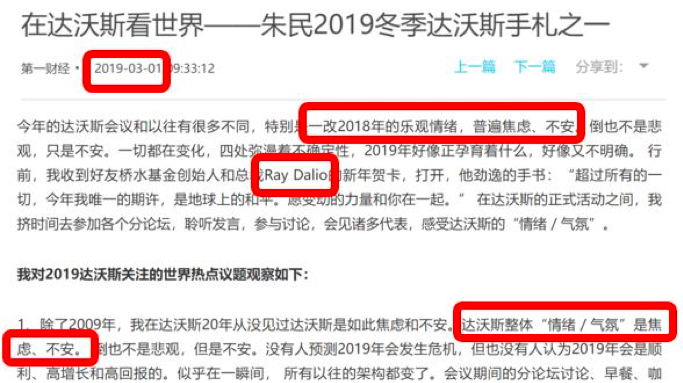
Comments of Min Zhu Who Participated in the 2019 Winter Davos
As a veteran Davos attendee, Min Zhu mentioned in his writings that unlike the optimistic atmosphere in 2018, almost everyone present was anxious this time. Further, Ray Dalio, the founder of Bridgewater Associates and one of the world's most influential KOLs in the financial industry, said, "Let's pray for peace", which also sends the message of anxiety to the audience.
The Davos Forum is the world's top financial and economic forum, which, however, has rendered an atmosphere of anxiety at the beginning of the year to the economists, institutional leaders, and even policymakers.
Yet, such uneasiness will result in a rise in Bitcoin's price in the following 6 months.
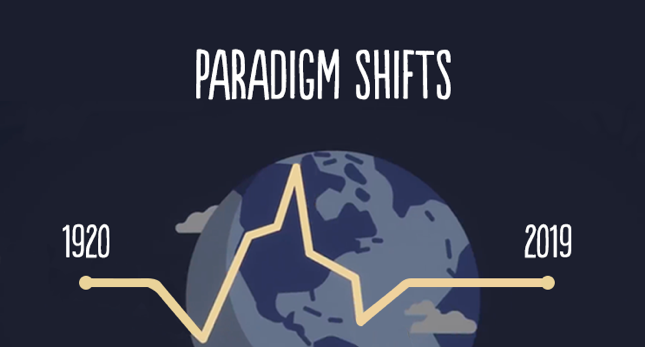
Ray Dalio's Paradigm Shifts
Ray Dalio warned again last month that Gold will be the best investment option for the next paradigm shift.
If you always invest according to technical analysis, it is highly possible to be eliminated during the paradigm shift of the market. And one of the classical paradigm shifts is the breakthrough of Bitcoin's price above $6,000. Almost everyone had thought that $6000 is a strong resistance price point. However, the paradigm shift resulted in a breakthrough happening.
In this year's paradigm shift, we found that Bitcoin is a great asset that many people would hold, this is evident as some big institutions and even countries have started to buy Bitcoins this year.
Wall Street, Bitcoin Exchange Guide
It means that institutional investors might choose to withdraw their funds from stocks and equities.
During the swinging of the pendulum, people often invest in stocks or commodities like real estate when the economy is good. However, when the market turns bad, they may choose to hold cash first. Once the economy becomes worse to a certain extent, such as when an economic or political crisis emerge, they will choose to store gold directly instead of having cash.
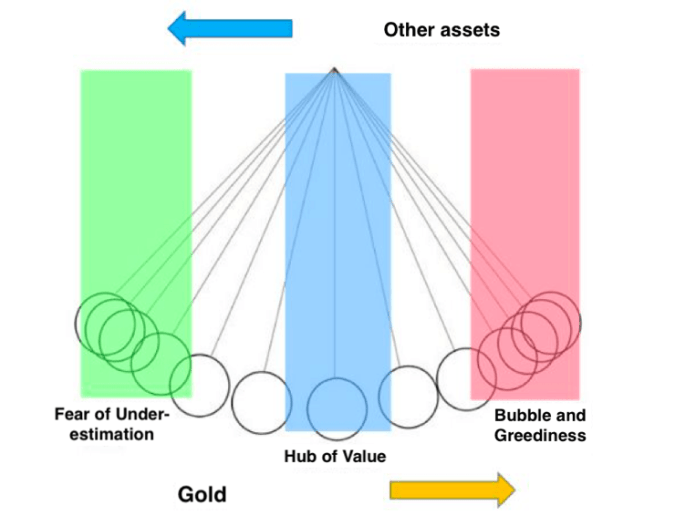
So, what Ray Dalio wants to tell us is that gold is moving to the right side in a state of being neglected or even feared by everyone, while **other assets **are moving to the left.
Surely, the pendulum will swing back, but the question is how long will that take? For now, the entire market is clearly moving to the right, which means that risk aversion is still on the rise.
An Inciting Situation
Recently, there is much news that can support our predictions on the global economic and political situation, such as the Huawei incident and the China-US trade war. Looking at the current situation, we find that the real estate and stock market have basically hit the bottom. There is still 2% to earn from rental income through real estate investment; while investors are afraid to buy stocks, especially the US stocks.
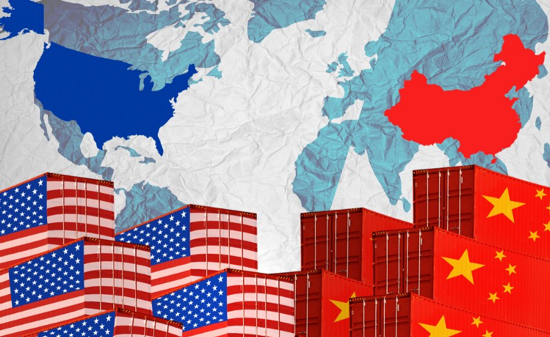
China-US Trade War, IT Pro
Moreover, the economy in most major countries are not good, and political tension is escalating. The status quo in the United States is not optimistic, not to mention Europe.
In the past two days, Japan has restricted exports to South Korea. These exports are materials being used in the manufacture of semiconductors. Once these restrictions come into effect, the possibility of South Korea's semiconductor industry collapsing is high, which kicks off another trade war.
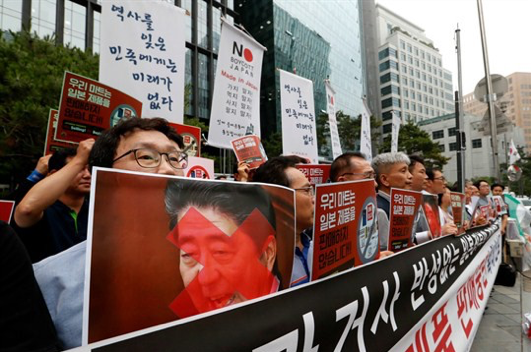
Japan-Korea Trade War, World Politics Review
Lastly, there is a rise of Populism, which advocates self-protection and new xenophobia that rejects external collaboration. Brexit has been discussed for many years now; this is also the case for the Middle East, Iran, and Iraq, although, for these countries, there are also other factors besides the ones mentioned above. Intuitively, we feel that the political situation is heading in the** direction of conservative populism**.
Survive or Thrive?
In this cycle, people will** instinctively avoid risks**, because if the situation continues as it is, the conflict will intensify.
Of course, this is one of the worst-case scenarios, but we all know that imagination is one of the strongest capabilities a human has. Once you imagine that something bad can happen soon, you will choose to protect yourself before it actually happens.
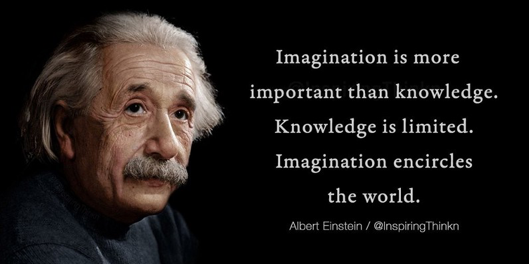
Quote from Albert Einstein, Inspiring Thinkn
When we witness all kinds of incidents in real life, which signals us to protect ourselves, we will tend to become risk-averse. At this time, because we want to save ourselves, most of us become selfish, holding on to anything that ensures our survival.
You won't think about going outside to collaborate with anyone else, creating something new for the future, or figuring out what kind of changes technology could bring to us in the future? No, you won't.
The only thing you think about at this time is to survive.
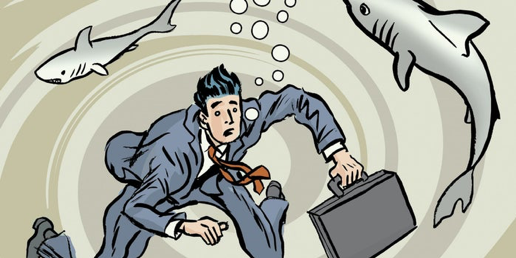
Survival, Entrepreneur
How to avoid risks? Ray Dalio only mentioned Gold, not Bitcoin, it seems that he was not bullish about Bitcoin before. But it is undeniable that Bitcoin is another form of digital gold, which has become a consensus among more and more people.
Then why does the growth of altcoins stagnate in this cycle? And what can we learn from this situation?
In the last cycle, there have been Ethereum, DeFi and other blockchain technologies to outline the future for us. It gave people positive expectations about the future.
Indeed, prosperity and hope are mainstream factors that drive the world's development, but there are cycles as well. The trend now is that the pendulum is swinging towards being conservative and risk-averse, and it does not look to change anytime soon.
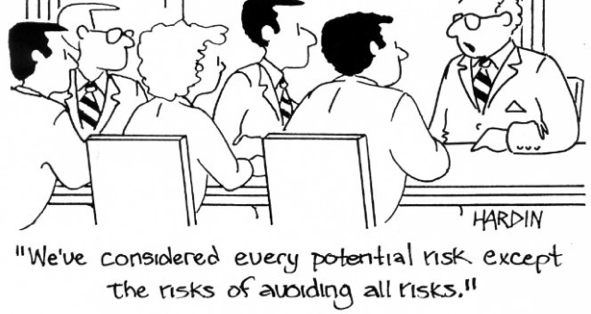
Risk-Aversion, Branding Strategy Source
Bitcoin or Altcoins?
Things are clearer if we divide the cryptocurrency world into two parts. In the current cycle, bitcoin adoption is driven by people's demand for a safe haven asset, not for the hype.
Although Bitcoin is the very first application of blockchain technology, it has nothing to do with technology now. At present, people simply see **Bitcoin as "digital gold" **--- something conservative, and that could possibly save you when you are facing trouble. On the other hand, altcoins satisfy the hype demand. People want to get rich by betting on altcoins, but few people will bet on Bitcoin, because we believe that Bitcoin gains may not be enough.
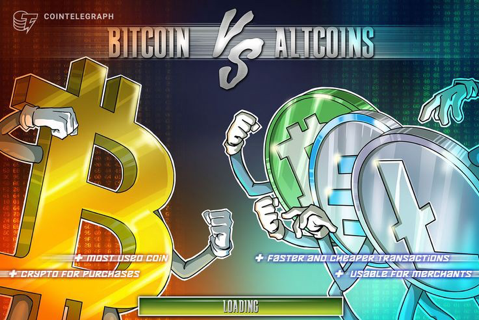
Bitcoin vs Altcoins, CoinTelegraph
Reality often reflects the will of the majority --- the pendulum swings towards risk aversion, rather than hype.
According to Ray Dalio, gold is gearing up for a bullish reversal, while other assets are likely to depreciate. In the past six months, the cryptocurrency market has Bitcoin seeing a bull run, while altcoins show bearish signals.
Altcoins represent the future and hype, while Bitcoin represents conservatism and risk aversion.
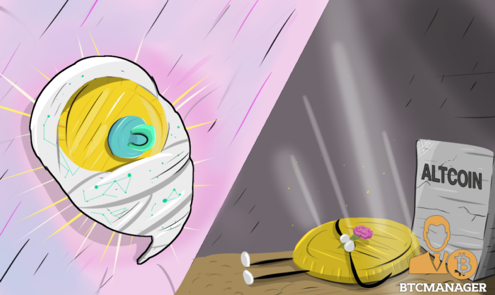
Birth & Death of Altcoins, BTCManager
The Future of the Token Economy
Is* there still a future for the token economy?*
Before giving an answer, let's first think about the following questions: what is a healthy token market? Is it a market full of hype? Or a market with price inflation? Although both tend to be what the investors prefer but are this kind of market really healthy?
The answer is quite simple. A market full of hype and price inflation is not healthy. However, I still believe that the token economy has a future, which the key to it is the cost.
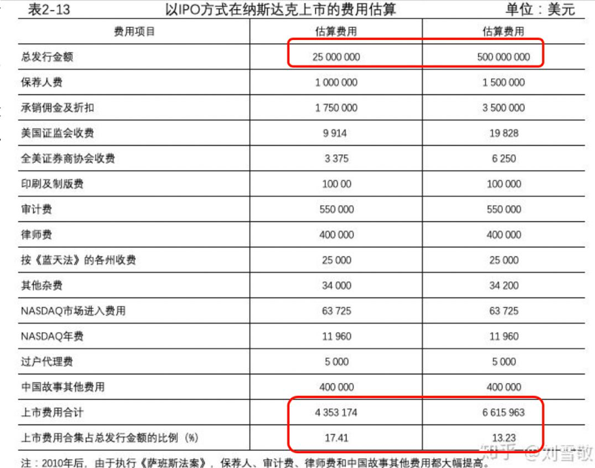
Nasdaq Listing Requirements & Costs, zhihu.com
Here are the objectives of the two IPOs: one is raising $25 million, while the other is raising $500 million. The second last line shows the cost of the IPOs going public on Nasdaq, which is $4.3 million and over $6 million respectively. The** last line** shows the cost as a percentage of the amount raised, which is 17% and 13% respectively.
As for the Sci-Tech Innovation board, which the threshold is $1 billion to $10 billion, the minimum value for such a company to be listed is $1 billion. Then what about the cost? It's about $30 million to $100 million.
In other words, even if companies can gain a huge amount of money after being listed, it must pay a large sum upfront first.
What about the crypto market? Take Binance DEX as an example. The cost for a token to be listed is about $100,000 USD. This is a benchmark in the industry. Compared with the Sci-Tech Innovation board, it is characterized by the greatly reduced cost.
Binance Dex, Blockonomi
When we look at Sci-Tech Innovation board's introduction, it states that compared with Nasdaq and other exchanges, it provides higher efficiency with lower cost.
*However, even if the Sci-Tech Innovation board wants to lower the threshold, disregarding requirements for revenue and market value, *it won't be able to reduce its income or listing cost to the extent of the crypto market. Based on this fact, we may well hold our faith in the token economy due to its low cost. Every economic activity has a cost, and since it's a market activity, we can compare the costs of different activities.
Obviously, it costs less to list a token. Although the quality of the projects available now is relatively poor, we may still see more projects of better quality in the future.
Take Netflix as an example. When Netflix was first launched, we used to be **bearish **on it due to the poor quality of videos, which was contrary to what people needed. But now, Netflix is doing a pretty good job. The widely criticized low-quality videos in its early days are no longer discussed.

Netflix Website at the Early Beginning, Business Insider
Therefore, what matters most for a project in its infancy is the cost. Only by having a low threshold would you be able to survive in the Internet era.